
NT Idea of Holiness
The NT reaffirms the ideas of holiness found in Judaism.
· Thus God, the Temple, and the law are all holy.
· Like Israel in the OT, the Christian community is holy.
· Paul addresses his communities as ‘the saints,’ that is, ‘the holy ones’ (Rom. 1:7; 1 Cor. 1:2), and argues that believers consecrate one another holy (1 Cor. 7:14).
· The First Letter of Peter repeats the OT in calling the community a holy nation (2:9) and demanding that it be holy because God is holy (1:16).
In general, the Christian way of life derives from God and so is holy.
Consequently, the community must avoid sin and evil and anything that would compromise its holiness and closeness to God.
Distinctive Feature of the NT
 The distinctive feature of the New Testament idea of holiness is that the external aspect of it has almost entirely disappeared; the spiritual and ethical meaning has become supreme.
It is due to the pivotal development in the salvation history, namely, the Incarnation.
In Jesus God takes a new and decisive step in relating to man.
 As John 3:16-17 states: “God so loved the world that he gave his only Son, that whoever believes in him should not perish but have eternal life. For God sent the Son into the world, not to condemn the world, but that the world might be saved through him.”
By incarnation the external laws of ritual purity that was so characteristic of the OT prescriptions of the law of holiness lose their relevance.
For example, as St. Paul recounts in Galatians 4:4-7: “When the time had fully come, God sent forth his Son, born of woman, born under the law, to redeem those who were under the law, so that we might receive adoption as sons.
According to Leviticus 12 when a woman had borne a child, if it was a boy, she was unclean for forty days, if it was a girl, for eighty days.
She could go about her household and her daily business but she could not enter the Temple or share in any religious ceremony.
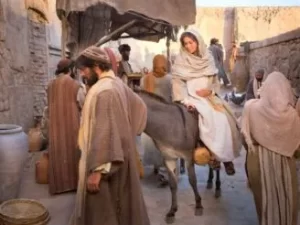 But with Incarnation woman becomes not impure; on the contrary she is “full of grace”, the Mother of Son of the Most High (Lk 1:32), the Mother of the kyrios (Lk 1:43).
There were in the OT very severe and elaborate laws for the ritually pure Israelites which prohibited them any contact with lepers (Lev chs.13, 14; Nu 12:10-15 etc.).
But according to Mark 1:41 “moved with pity, Jesus stretched out his hand and touched him (the leper).” Or again, corpses were considered as ritually unclean and defiling in the Old Testament (Lev 21:1-3; 21:11; Nu 6:6-8 etc.).
In Luke 7:13-14 “Jesus came and touched the bier” of the dead son of the widow of Nain.
Jesus proclaimed a new view of religion and morality according to which men are cleansed or defiled, not by anything outward, but by the thoughts of their hearts (Mt 15:17-20), and God is to be worshipped neither in Samaria nor Jerusalem, but wherever men seek Him in spirit and in truth (Jn 4:21-24).
The well-known text in Acts underlines the same thought: “What God has cleansed, you must not call common” (Acts 10:15).
A holy life is no more one where man’s actions constitute the centre, but it is a life in which all that man does comes from the centre which is God, the source of holiness.
The centre in Christian life, and consequently the value system, has shifted.
As St. Paul so emphatically puts it: “whatever gain I had, I counted as loss for the sake of Christ. Indeed I count everything as loss because of the surpassing worth of knowing Christ Jesus my Lord.
For his sake I have suffered the loss of all things, and count them as refuse, in order that I may gain Christ” (Phl 3:7-8).
“It is no longer I who live, but Christ who lives in me” (Gal 2:20).
It is a life where Christ constitutes the core of ones being.
It is a life soaked through and through by a sense of God’s reality and claim, and self given to the great movement of His Will (Jn 4:34).
God’s generosity becomes still more overwhelming when we realize its ultimate goal: the gift of adoptive sonship.
It is a free, unmerited gift – grace – from the Father.
Through the gift of the Holy Spirit, supernatural adoption transforms man interiorly in the Spirit of the Father and the Son.
God transforms man into Son’s image: “And because you are sons, God sent the Spirit of his Son in-to your hearts, crying ‘Abba, Father.'” (Ga1.4,6).
The roots of the popular word “spirituality” are actually Christian.
In the NT, Apostle Paul wrote about the Spirit (pneuma) and spiritual persons (pneumatikoi).
To Paul’s way of thinking, spiritual persons are those who live according to the Spirit of God.
The Spirit’s role is crucial, for he is the one who mediates the presence, character, and the power of the ascended Christ to us.
He brings Christ close to us.
So spirituality (sanctification) is about being attentive to the Spirit’s voice, open to his transforming impulses, and empowered by his indwelling presence.
It is about living all of life before God in the transforming and empowering presence of His Spirit.
The gift of grace makes us true children of God, beloved sons of the Father and brothers of Christ, and temples of the Holy Spirit.
As a result there now exist between the justified man and the divine persons the closest and most loving bonds.
These wonders of God’s love create the closest of ties between the Christian and the Three Divine Persons.
His whole life begins to be permeated with dispositions appropriate to this adorable reality: filial obedience toward the Father, brotherly respect and deep intimacy with the Son, and attentive, loving docility toward the Spirit whose temple he has become and whom he must take care not to ‘extinguish’ or ‘grieve’.” (1 Cor. 6,19: 1 Thes.5,19. Eph.4,30).
What opens up before us is the possibility of a friendship with God.
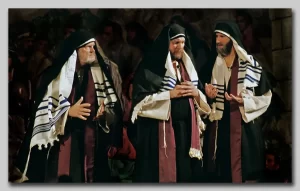 [Very many preachers ignore these pivotal aspects of Salvation History, and recommend “holiness according to the OT.” Thereby they are doing a disservice to the Christian community. It very often leads to pharisaism and disfigurement of Christian Spirituality! “No one puts new wine into old wineskins. If he does, the wine will burst the skins- and the wine is destroyed, and so are the skins. But new wine is for fresh wineskins.” Mark 2:22].
SANCTIFICATION.
 There begins a process of sanctification.
To sanctify means commonly to make holy, that is, to separate from the world and consecrate to God.
To sanctify is to consecrate or set apart for God.
But the chief interest of Christian thought lies in the spiritual dimension and the resulting ethical ideal in practical life – sanctification considered as the active deed or process by which the life is made holy.
The pivot of this movement is the conception of God.
What it means to belong to God (holiness, sanctification) depends upon the nature of the God to whom man belongs.
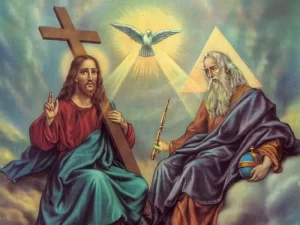 As God is Trinity, He is a community of mutual love and fellowship.
The characteristics of a sanctified life too becomes that of love and fellowship.
Further, as God’s holy character is the standard of absolute moral perfection (Is 5:16), so too man should be “perfect as your Heavenly Father is perfect” (Mt 5:48).
Since the Spirit is divine, his most frequently used designation in the Bible is “the Holy Spirit.” While many characteristics of the Spirit are revealed in Scripture, only one gets embedded in his very name.
It is a reminder that we cannot become intimate with the Holy Spirit while stubbornly harbouring evil in our heart.
To belong to God, His son, is no mere external matter.
Jesus declares that belonging to God means likeness to Him; sonship is sharing His spirit of loving good will (Mt 5:43-48).
Brother and sister for Jesus are those who do God’s will (Mk 3:35).
For Christians, the ultimate goal of sanctification is “Christlikeness”.
Paul wrote: “For those God foreknew he also predestined to be conformed to the image of his Son, that he might be the firstborn among many brothers and sisters” (Romans 8:29).
It is God’s purpose that the character of Jesus Christ be replicated among those who follow him.
Our Relation to God as Personal
The danger has always been that this consecration and sanctification should be thought of in a negative or passive way.
The Christian’s surrender is not to an outer authority but to an inner, living fellowship.
This positive and vital meaning of sanctification dominates Paul’s thought.
 So completely is his life filled by this fellowship that he can say, “It is no longer I that live, but Christ lives in me” (Gal 2:20).
But there is no quietism here.
It is a very rich and active life, this life of fellowship to which we are surrendered.
It is a life of sonship in trust and love, with the spirit that enables us to say “Abba, Father” (Rom 8:15; Gal 4:6).
It is a life of unconquerable kindness and good will (Mt 5:43-48).
It is a life of “faith working through love” (Gal 5:6), it is having the mind of Christ (Phil 2:5).
The sanctified life, then, is the life so fully surrendered to fellowship with Christ day by day that the inner spirit and outward expression are ruled by His spirit.
Sanctification as God’s Gift, resulting in transformation.
The two great facts as to this fellowship are, that it is God’s gift, and that its fruit is holiness.
First of all, it is God’s gift; man can never merit it.
What God gives us is nothing less than Himself.
The gift is not primarily forgiveness, nor victory over sin, nor peace of soul, nor hope of heaven, nor anything like that.
It is fellowship with Him, which includes all of these aspects and without which none of these can exist.
Secondly, the fruit of this fellowship is holiness.
For Christians faith requires the moral surrender of our life to God.
Surrender is manifested ethically; it is opening the life to definite moral realities and powers, to love, joy, peace, patience, kindness, goodness, faithfulness, gentleness, self-control, to that which we know as the Spirit of Christ (Gal 5:22-23).
The New Testament leaves no room for the thought of a holiness divorced from those moral qualities.
It also explains why classic Christian spirituality took the challenge of the sinful nature so seriously, practiced self-examination, cultivated virtue, and embraced spiritual disciplines.
Being in relationship with God begins our transformation.
True friendship with Him is alwaystransforming friendship; it never leaves us unchanged.
The relational dynamic
The relational dynamic which is also about keeping company with God demands that we stay alert and responsive to the voice of the Spirit.
It transforms us to the “image of Christ”, leading us to a life befitting the children of God.
Sanctification as Man’s Task
 All Christian life is gift and task alike.
“Work out your own salvation …. for it is God who works in you” (Phil 2:12 f).
All is from God; we can only live what God gives.
But there is a converse to this: only as we live it out can God give to us the life.
It is not only God’s gift, but also our task.
“… let us cleanse ourselves from all defilement of flesh and spirit, perfecting holiness (hagiosune) in the fear of God” (2 Cor 7:1).
Significant is Paul’s use of the word “walk.”
We are to “walk in newness of life,” “by (or in) the Spirit,” “in love,” and “in Christ Jesus the Lord” (Rom 6:4; Gal 5:16; Eph 5:2; Col 2:6).
Sanctification, a life-long Task
It is a daily living-out to the end, of a Spirit filled life.
Hence there is always the danger of getting lukewarm or of giving up.
Vocational dimension of Christian holiness.
The Christian life is about relating and it is about becoming.
It is also about doing.
Christ wants to live with us, dwell in us, and work through us.
And this leads us to the reality of vocation.
The word comes from the Latin vocare, which means “to call.”
All of us have a calling upon our lives to participate in the purposes of God.
God has revealed Himself to be one Who acts — who does things.
Therefore to be in God’s likeness also has an active dimension for us.
This is fulfilled in the vocational dynamic of Christian spirituality.
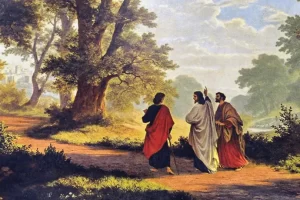 We are called to participate in the redemptive work of God, by spreading the gospel (Mat 28:19-20).
The Great Commission contains one primary, central command, the imperative “make disciples,” with three subordinate participles, “going,” baptizing,” and “teaching.”
Thus, implied in the imperative “make disciples,” is both the call to and the process of becoming a disciple.
Jesus taught us to pray for his kingdom to come, and work actively for its establishment.
Jesus inaugurated the “rule of God” in the world.
But we are called to contribute to the advance of this kingdom according to the calling that each one has received.
Conclusion
We may sum up as follows:
The word “sanctify” is used with two broad meanings:
(1) The first is to devote, to consecrate to God, to recognize as holy, that is, as belonging to God.
It is above all to be practiced in its ethical sense.
This is the regular Old Testament usage.
(2) The New Testament deepens this into a whole-hearted surrender to the fellowship of God and to the rule of His Spirit.
This sanctifying is not merely negative, the mere separation from sin, but the progressive growing constantly in Christ.
It is the result of the divine adoption through the Son and wrought out by God’s Spirit.
It is lived out in a daily fellowship with the Three Persons of the Trinity, resulting in a transformed life in the “image of Christ”.
This sanctified life has also a vocational dimension where we are called to participate in the redemptive work of God, by spreading the gospel.